
Aplicaciones de redes neuronales artificiales para optimizar la inyección de agua alternada con gas: una revisión integral
Resumen
La inyección de Agua Alternada con Gas (WAG, por sus siglas en inglés) es un método cíclico que consiste en inyectar gas y agua de manera alternada, repitiendo este proceso a lo largo de múltiples ciclos. Sin embargo, la toma de decisiones durante el proceso WAG suele implicar elecciones críticas que, en ocasiones, no logran proporcionar resultados precisos y eficaces. En los últimos años, el desarrollo de las Redes Neuronales Artificiales (ANN) ha abierto oportunidades prometedoras para transformar los procesos de Recuperación Mejorada de Petróleo (EOR).
Esta revisión integral examina metodologías basadas en ANN para predecir el desempeño de proyectos de inyección WAG. El estudio comienza con una visión general del proceso de inyección WAG, destacando su relevancia en la recuperación mejorada de petróleo. Posteriormente, se explora la arquitectura y complejidad de las ANN, proporcionando una base conceptual sobre su funcionamiento. A continuación, se analiza la aplicación de ANN en el desarrollo de modelos predictivos para la inyección WAG, enfatizando su potencial para mejorar la precisión en el pronóstico del rendimiento del proceso.
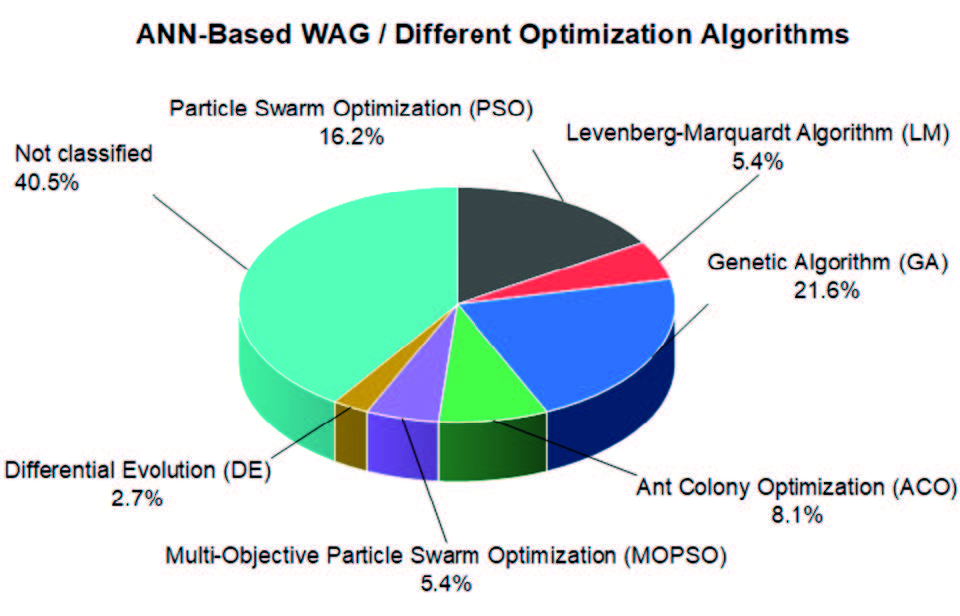
Los aspectos clave discutidos incluyen la aplicación de ANN en la inyección WAG considerando diferentes tipos de gas y roca, las funciones utilizadas en el modelado ANN de WAG y los algoritmos empleados en las simulaciones basadas en ANN. Además, esta revisión destaca los desafíos asociados con la implementación de modelos predictivos basados en ANN en proyectos WAG. Al sintetizar investigaciones existentes, este estudio tiene como objetivo proporcionar conocimientos valiosos a los ingenieros petroleros, especialmente para comprender y aplicar modelos ANN destinados a optimizar las estrategias de inyección WAG.
Referencias bibliográficas
Afzali, S. (2021). Mathematical modeling and simulation of water-alternating-gas (WAG) injection. Memorial University of Newfoundland.
Al-Haboobi, Z. I. M. (2019). Calibrating the Todd and Longstaff's mixing parameter value for miscible finite sized slug WAG injection for application and optimisation on a field scale. Heriot-Watt University Edinburgh, UK. https://doi.org/10.3997/2214-4609.201900127
Al-Mudhafar, W. J., Rao, D. N., & McCreery, E. B. (2017). Evaluation of immiscible CO₂ enhance oil recovery through the CGI, WAG, and GAGD processes in South Rumaila oil field. In 79th EAGE Conference and Exhibition 2017 (pp. 1–5). European Association of Geoscientists & Engineers. https://doi.org/10.3997/2214-4609.201701349
Al-Mudhafar, W. J., & Rao, D. (2017). Lessons learned from the field-scale simulation of the gas-assisted gravity drainage GAGD process in heterogeneous sandstone oil reservoirs. In SPE Western Regional Meeting (D031S006R002). SPE. https://doi.org/10.2118/185732-MS
Amar, M. N., Jahanbani Ghahfarokhi, A., Ng, C. S. W., & Zeraibi, N. (2021). Optimization of WAG in real geological field using rigorous soft computing techniques and nature-inspired algorithms. Journal of Petroleum Science and Engineering, 206, 109038. https://doi.org/10.1016/j.petrol.2021.109038
Amar, M. N., Zeraibi, N., & Jahanbani Ghahfarokhi, A. (2020). Applying hybrid support vector regression and genetic algorithm to water alternating CO₂ gas EOR. Greenhouse Gases: Science and Technology, 10(3), 613–630. https://doi.org/10.1002/ghg.1982
Ampomah, W., Acheampong, S. A., McMillan, M., Bratton, T., & El-Kaseeh, G. (2022). Development of a machine learning assisted framework in calibrating in-situ stress changes through time-lapse vertical seismic profiling. In Proceedings of the 16th Greenhouse Gas Control Technologies Conference (GHGT-16) (pp. 23–24). https://doi.org/10.2139/ssrn.4285741
Ampomah, W., Balch, R., Will, R., Cather, M., Gunda, D., & Dai, Z. (2017). Co-optimization of CO₂-EOR and storage processes under geological uncertainty. Energy Procedia, 114, 6928–6941. https://doi.org/10.1016/j.egypro.2017.03.1835
Amr, H., El-Shafie, A., El Mazoghi, H., Shehata, A., & Taha, M. R. (2011). Artificial neural network technique for rainfall forecasting applied to Alexandria, Egypt. Int. J. Phys. Sci, 6(6), 1306–1316
Andersen, P. Ø., Nygård, J. I., & Kengessova, A. (2022). Prediction of oil recovery factor in stratified reservoirs after immiscible water-alternating gas injection based on PSO-, GSA-, GWO-, and GA-LSSVM. Energies, 15(2), 656. https://doi.org/10.3390/en15020656
Arbib, M. A. (2003). The handbook of brain theory and neural networks. MIT Press. https://doi.org/10.7551/mitpress/3413.001.0001
Asante, J., Ampomah, W., Tu, J., & Cather, M. (2024). Data-driven modeling for forecasting oil recovery: A timeseries neural network approach for tertiary CO₂ WAG EOR. Geoenergy Science and Engineering, 233, 212555. https://doi.org/10.1016/j.geoen.2023.212555
Belazreg, L., & Mahmood, S. M. (2020). Water alternating gas incremental recovery factor prediction and WAG pilot lessons learned. Journal of Petroleum Exploration and Production Technology, 10(2), 249–269. https://doi.org/10.1007/s13202-019-0694-x
Belazreg, L., Mahmood, S. M., & Aulia, A. (2021). Fast and cost-effective mathematical models for hydrocarbon-immiscible water alternating gas incremental recovery factor prediction. ACS Omega, 6(27), 17492–17500. https://doi.org/10.1021/acsomega.1c01901
Caudle, B. H., & Dyes, A. B. (1958). Improving miscible displacement by gas-water injection. Transactions of the AIME, 213(1), 281–283. https://doi.org/10.2118/911-G
Chen, L., et al. (2020). Application of artificial neural networks in CO₂ flooding scenario analysis. Energy & Fuels, 34(5), 625.
Christensen, J. R., Stenby, E. H., & Skauge, A. (2001). Review of WAG field experience. SPE Reservoir Evaluation & Engineering, 4(2), 97–106. https://doi.org/10.2118/71203-PA
Dharma, S., Hassan, M. H., Ong, H. C., Sebayang, A. H., Silitonga, A. S., Kusumo, F., & Milano, J. (2017). Experimental study and prediction of the performance and exhaust emissions of mixed Jatropha curcas–Ceiba pentandra biodiesel blends in diesel engine using artificial neural networks. Journal of Cleaner Production, 164, 618–633. https://doi.org/10.1016/j.jclepro.2017.06.065
Du, X., Salasakar, S., & Thakur, G. (2024). A comprehensive summary of the application of machine learning techniques for CO₂-enhanced oil recovery projects. Machine Learning and Knowledge Extraction. https://doi.org/10.3390/make6020043
Elsharafi, M. O. (2018). Literature review of water alternation gas injection. Journal of Earth Energy Engineering, 7(2), 33–45. https://doi.org/10.25299/jeee.2018.vol7(2).2117
Enab, K. A. (2018). Artificial neural network based design protocol for WAG implementation in CO₂ injection using fishbone wells in low permeability oil reservoirs.
Enab, K., & Ertekin, T. (2021). Screening and optimization of CO₂-WAG injection and fish-bone well structures in low permeability reservoirs using artificial neural network. Journal of Petroleum Science and Engineering, 200, 108268. https://doi.org/10.1016/j.petrol.2020.108268
Ertekin, T., & Sun, Q. (2019). Artificial intelligence applications in reservoir engineering: A status check. Energies, 12(15), 2897. https://doi.org/10.3390/en12152897
Esene, C., Zendehboudi, S., Shiri, H., & Aborig, A. (2020). Deterministic tools to predict recovery performance of carbonated water injection. Journal of Molecular Liquids, 301, 111911. https://doi.org/10.1016/j.molliq.2019.111911
Gao, M., Liu, Z., Qian, S., Liu, W., Li, W., Yin, H., & Cao, J. (2023). Machine-learning-based approach to optimize CO₂-WAG flooding in low permeability oil reservoirs. Energies, 16(17), 6149. https://doi.org/10.3390/en16176149.
Hasanzadeh, M., & Madani, M. (2024). Deterministic tools to predict gas assisted gravity drainage recovery factor. Energy Geoscience, 5(3), 100267. https://doi.org/10.1016/j.engeos.2023.100267
Hung, V. T. (2020). Integrated reservoir modelling workflow and optimization framework for CO₂ sequestration using water alternating gas process under geological uncertainties [Tesis, Kyushu University]. Kyushu University Institutional Repository. https://doi.org/10.1016/j.jngse.2020.103208
Jaturakhanawanit, S., & Wannakomol, A. (2011). Water alternating gas injection for enhanced oil recovery in the Phitsanulok Basin. Suranaree Journal of Science & Technology, 18(4), 267
Kengessova, A. (2020). Prediction efficiency of immiscible water alternating gas performance by LSSVM-PSO algorithms [Tesis de maestría, University of Stavanger]. University of Stavanger, Norway.
Kenig, S., Ben-David, A., Omer, M., & Sadeh, A. (2001). Control of properties in injection molding by neural networks. Engineering Applications of Artificial Intelligence, 14(6), 819–823. https://doi.org/10.1016/S0952-1976(02)00006-4
L Lv, W., Tian, W., Yang, Y., Yang, J., Dong, Z., Zhou, Y., & Li, W. (2021). Method for potential evaluation and parameter optimization for CO₂-WAG in low permeability reservoirs based on machine learning. In IOP Conference Series: Earth and Environmental Science (Vol. 651, p. 032038). IOP Publishing. https://doi.org/10.1088/1755-1315/651/3/032038
Ma, Jaehyun. (2010). Design of an Effective Water-Alternating-Gas (WAG) Injection Process Using Artificial Expert Systems.
Massoud, Mohammed Alsharif Emhemmed, Li, Yiqian, & Amar, Ibrahim A. (2022). Literature review of nanotechnology in the enhanced oil recovery. Journal of Engineering Research.
Nait Amar, M., Zeraibi, N., & Redouane, K. (2018). Optimization of WAG process using dynamic proxy, genetic algorithm and ant colony optimization. Arabian Journal for Science and Engineering, 43(11), 6399–6412. https://doi.org/10.1007/s13369-018-3173-7
Negash, B. M., Tufa, L. D., & Ramasamy, M. (2018). System identification based proxy modeling of a reservoir under IWAG. IOP Conference Series: Materials Science and Engineering, 458(1), 012055. https://doi.org/10.1088/1757-899X/458/1/012055
Ogbeiwi, P., & Stephen, K. D. (2023). Optimising the value of a CO₂ water-alternating-gas injection project under geological and economic uncertainties using an improved artificial neural network. Preprint. https://doi.org/10.31223/X5X95S
Qin, S., Li, J., Chen, J., Bi, X., & Xiang, H. (2023). Research on displacement efficiency by injecting CO₂ in shale reservoirs based on a genetic neural network model. Energies. https://doi.org/10.3390/en16124812
Rahmanifard, H., & Plaksina, T. (2019). Application of artificial intelligence techniques in the petroleum industry: A review. Artificial Intelligence Review, 52(4), 2295–2318. https://doi.org/10.1007/s10462-018-9612-8
Samba, M. A., & Syihab, Z. (2014). Development of a predective model for EOR water alternating gas injection using proxy model derivided from artificial neural network model.
Samba, M. A., Aldokali, I., & Elsharaf, M. O. (2019). A new EOR technology: Gas alternating gas injection. Journal of Earth Energy Engineering, 8(1), 27–32. https://doi.org/10.25299/jeee.2019.vol8(1).2354
Schneider, C., & Shi, W. (2005). A miscible WAG project using horizontal wells in a mature, offshore, carbonate Middle East reservoir. In SPE Middle East Oil and Gas Show and Conference, SPE-93606. SPE. https://doi.org/10.2118/93606-MS
Smith, J., et al. (2018). Artificial neural network-based predictive modeling for WAG injection optimization. Journal of Petroleum Science and Engineering. Journal of Petroleum Science and Engineering, 162, 123–1.
Song, Y., Sung, W., Jang, Y., & Jung, W. (2020). Application of an artificial neural network in predicting the effectiveness of trapping mechanisms on CO₂ sequestration in saline aquifers. International Journal of Greenhouse Gas Control, 98, 103042. https://doi.org/10.1016/j.ijggc.2020.103042
Sulak, R. M. (1991). Ekofisk Field: The first 20 years. Journal of Petroleum Technology, 43(10), 1265–1271. https://doi.org/10.2118/20773-PA
Sun, Q., Ampomah, W., You, J., Cather, M., & Balch, R. (2021). Practical CO₂-WAG field operational designs using hybrid numerical–machine-learning approaches. Energies, 14(4), 1055. https://doi.org/10.3390/en14041055
van Assen, M., Muscogiuri, E., Tessarin, G., & De Cecco, C. N. (2022). Artificial intelligence: A century-old story. In C. N. De Cecco, M. van Assen, & T. Leiner (Eds.), Artificial intelligence in cardiothoracic imaging (Contemporary Medical Imaging). Humana, Cham. https://doi.org/10.1007/978-3-030-92087-6_1
Van, S. L., & Chon, B. H. (2017). Evaluating the critical performances of a CO₂-enhanced oil recovery process using artificial neural network models. Journal of Petroleum Science and Engineering, 157, 207–222. https://doi.org/10.1016/j.petrol.2017.07.034
Wei, J., Zhou, J., Li, J., Zhou, X., Dong, W., & Cheng, Z. (2021). Experimental study on oil recovery mechanism of CO₂ associated enhancing oil recovery methods in low permeability reservoirs. Journal of Petroleum Science and Engineering, 197, 108047. https://doi.org/10.1016/j.petrol.2020.108047
Wojnicki, M., Lubaś, J., Warnecki, M., Kuśnierczyk, J., & Szuflita, S. (2020). Experimental studies of immiscible high-nitrogen natural gas WAG injection efficiency in mixed-wet carbonate reservoir. Energies, 13(9), 2346. https://doi.org/10.3390/en13092346
Yang, Z., Yue, X., Shao, M., Yang, Y., & Yan, R. (2021). Monitoring of flooding characteristics with different methane gas injection methods in low-permeability heterogeneous cores. Energy & Fuels, 35(4), 3208–3218. https://doi.org/10.1021/acs.energyfuels.0c03594
Yazdani, B., Vaziri, P., & Sedaee Sola, B. (2022). Performance of water injection and CO₂ injection into oil reservoirs based on field data: Using ANNs to predict in the selected scenario. Journal of Petroleum Science and Technology, 12(3), 2–11.
You, J., Ampomah, W., & Sun, Q. (2020a). Co-optimizing water-alternating-carbon dioxide injection projects using a machine learning assisted computational framework. Applied Energy, 279, 115695. https://doi.org/10.1016/j.apenergy.2020.115695
You, J., Ampomah, W., & Sun, Q. (2020b). Development and application of a machine learning based multi-objective optimization workflow for CO₂-EOR projects. Fuel, 264, 116758. https://doi.org/10.1016/j.fuel.2019.116758
Yousef, A. M., Kavousi Ghahfarokhi, P., Alnuaimi, M., & Alatrach, Y. (2020). Predictive data analytics application for enhanced oil recovery in a mature field in the Middle East. Petroleum Exploration and Development, 47(2), 393–399. https://doi.org/10.1016/S1876-3804(20)60056-8
Zarringhalam, A., Alizadeh, M., Rafiee, J., & Moshirfarahi, M. M. (2016). Neural network prediction model of three-phase fluids flow in heterogeneous porous media using scaling analysis. Journal of Petroleum Science and Engineering, 138, 122–137. https://doi.org/10.1016/j.petrol.2015.09.023
Zhang, G. P., Patuwo, B. E., & Hu, M. Y. (2001). A simulation study of artificial neural networks for nonlinear time-series forecasting. Computers & Operations Research, 28(4), 381–396. https://doi.org/10.1016/S0305-0548(99)00123-9
Zhang, J., Feng, Q., Wang, S., Zhang, X., & Wang, S. (2016). Estimation of CO₂-brine interfacial tension using an artificial neural network. The Journal of Supercritical Fluids, 107, 31–37. https://doi.org/10.1016/j.supflu.2015.08.010
Zhong, Z., Carr, T. R., Wu, X., & Wang, G. (2019). Application of a convolutional neural network in permeability prediction: A case study in the Jacksonburg-Stringtown oil field, West Virginia, USA. Geophysics, 84(6), B363–B373. https://doi.org/10.1190/geo2018-0588.1
Descargas
Derechos de autor 2025 CT&F - Ciencia, Tecnología y Futuro

Esta obra está bajo una licencia internacional Creative Commons Atribución-NoComercial-CompartirIgual 4.0.
| Estadísticas de artículo | |
|---|---|
| Vistas de resúmenes | |
| Vistas de PDF | |
| Descargas de PDF | |
| Vistas de HTML | |
| Otras vistas | |