

Análisis reológico de emulsiones agua en crudo extrapesado: evaluación de los efectos del gas disuelto, el contenido de agua, la presión y la temperatura
Resumen
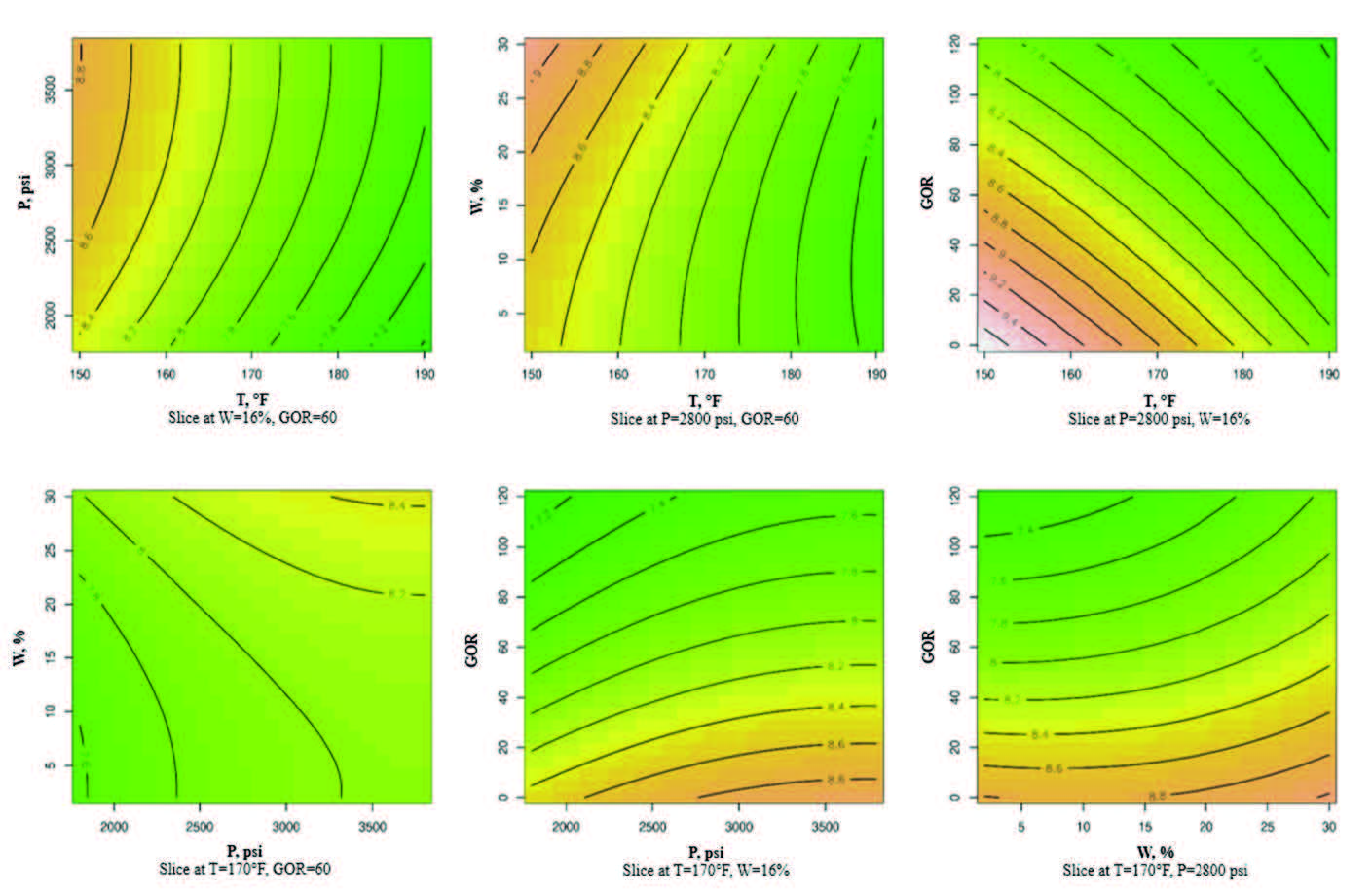
Los recursos disponibles de crudo del petróleo corresponden mayoritariamente a crudos pesados y extrapesados. En su producción, estos crudos pueden ser transportados en forma de emulsiones agua en crudo, experimentando diferentes condiciones de temperatura y presión, y cuyas gotas pueden contener gases diluidos. Por esta razón, el análisis de la influencia de la temperatura, la presión, el contenido de agua y el contenido de gases (GOR) en la reología y la distribución del tamaño de gota de emulsiones de agua en un crudo extrapesado conduce a la estimación de los consumos de potencia y los flujos netos obtenidos que pueden ser producidos. Este análisis fue aplicado a emulsiones de un crudo colombiano, por medio de un diseño de experimentos factorial 24 compuesto centrado en las caras con los factores temperatura [150, 190] °F, presión [1800, 3800] psi, contenido de salmuera (W) [2, 30] %w y contenido de gases (GOR) [0, 120] pie3/bbl. Los valores de los esfuerzos de corte, las viscosidades y las caídas de presión fueron medidos con un viscosímetro capilar, mientras la distribución de tamaño de gota fue determinada por medio de un analizador laser de dispersión de luz. Los resultados indicaron que las emulsiones preparadas fueron estables en los niveles establecidos. Asimismo, los tamaños de gota reportaron incremento con el aumento en GOR y W. la viscosidad de las emulsiones presentó un aumento con la presión y W. Contrariamente, la viscosidad de las emulsiones disminuyó con la temperatura, el GOR y el caudal establecido en el ensayo. Finalmente, el comportamiento reológico de las emulsiones analizadas en el presente trabajo fue determinado como de tipo pseudoplástico.
Referencias bibliográficas
Abd, R.M., Nour, A.H. and Sulaiman, A.Z. (2014). Kinetic stability and rheology of water-in-crude oil emulsion stabilized by cocamide at different water volume fractions. Int. J. Chem. Eng. Appl. 5 (2): 204-209. https://doi.org/10.7763/IJCEA.2014.V5.379
Abdulredha, M.M., Siti-Aslina, H., Luqman, C.A. (2020). Overview on Petroleum Emulsions, Formation, Influence and Demulsification Treatment Techniques. Arabian J. Chem, 13 (1), 3403–3428. https://doi.org/10.1016/j.arabjc.2018.11.014
Acosta, M., Reyes, L. H., Cruz, J. C., & Pradilla, D. (2020). Demulsification of Colombian Heavy Crude Oil (W/O) Emulsions: Insights into the Instability Mechanisms, Chemical Structure, and Performance of Different Commercial Demulsifiers. Energy & Fuels, 34(5), 5665–5678. https://doi.org/10.1021/acs.energyfuels.0c00313
Allenson, S., A. Yen, and F Lang. (2011). Application of emulsion viscosity reducers to lower produced fluid viscosity. Offshore Technology Conference Brasil. Rio de Janeiro. OTC-22443-MS.
Al-Roomi, Y., George, R., Elgibaly, A. and Elkamel, A. (2004). Use of a novel surfactant for improving the transportability/transportation of heavy/viscous crude oils. Journal of Petroleum Science and Engineering, 42(2-4), 235–243. http://doi.org/10.1016/j.petrol. 2003.12.014
Al-Yaari, M., Hussein, I.A., Al-Sarkhi, A. (2014). Pressure drop reduction of stable water-in-oil emulsions using organoclays. Applied Clay Science, 95, 303-309. https://doi.org/10.1016/j.clay.2014.04.029
Behzadfar, E., and S.G. Hatzikiriako. (2014). Rheology of bitumen: Effects of temperature, pressure, CO2 concentration and shear rate. Fuel, 116: 578-587. https://doi.org/10.1016/j.fuel.2013.08.024
Bird, R.W., Stewart, W.E., Lightfoot, E.N. (1996). Fenómenos de Transporte. Editorial Reverté S.A. 2da edición en Español.
Buitrago, F.; Quevedo, O. and Torres, F. (2012). Pre factibilidad centro de investigación del crudo pesado. Tesis de especialización. Universidad EAN. Bogotá, Colombia
Bulgarelli, N.A.V., Biazussi, J.L., Verde, W.M., Perles, C.E., de Castro, M.S., Bannwart, A.C. (2021). Relative viscosity model for oil/water stable emulsion flow within electrical submersible pumps. Chemical Engineering Science, 245, 116827. https://doi.org/10.1016/j.ces.2021.116827
Bullard, J.W., Pauli, A.T., Garboczi, E.J. and Martys, N.S. (2009). A comparison of viscosity–concentration relationships for emulsions. Journal of Colloid and Interface Science, 330(1), 186-193. https://doi.org/10.1016/j.jcis.2008.10.046
Chhabra, R.P. (2010). Non-Newtonian fluids: an introduction. Rheology of complex fluids, 3-34.
Ching, B., Golay, M.W., Johnson, T. J. (1984). Droplet Impacts Upon Liquid Surfaces. Science, 226(4674), 535–537. https://doi.org/10.1126/science.226.4674.535
Condor, B.E., de Luna, M.D.G., Abarca, R.R.M. et al. (2022). Optimization and modeling of carbohydrate production in microalgae for use as feedstock in bioethanol fermentation. International Journal of Energy Research, 46(13), 19300-19312. https://doi.org/10.1002/er.7709
da Silva, M., Sad, C.M.S., Pereira, L.B., et al. (2018). Study of the stability and homogeneity of water in oil emulsions of heavy oil. Fuel, 226, 278-285. https://doi.org/10.1016/j.fuel.2018.04.011
Dan, D., and Jing., G. (2006). Apparent viscosity prediction of non-newtonian water-in-crude oil emulsions. Journal of Petroleum Science and Engineering, 53, 113-122. https://doi.org/10.1016/j.petrol.2006.04.003
de Oliveira, M.C.K., Miranda, L.R.O., de Carvalho, A.B.M., Miranda, D.F.S. (2018). Viscosity of Water-in-Oil Emulsions from Different American Petroleum Institute Gravity Brazilian Crude Oils. Energy & Fuels, 32(3), 2749–2759. https://doi.org/10.1021/acs.energyfuels.7b02808
Dong, B., Quin, Z., Wang, Y., Zhang, J., Xu, Z., Liu, A., Guo, Z. (2022). Investigating the Rheology and Stability of Heavy Crude Oil-in-Water Emulsions Using APG08 Emulsifiers. ACS Omega, 7(42), 37736–37747. https://doi.org/10.1021/acsomega.2c04684
Ecopetrol (2014). Equipo y método para la preparación de emulsiones agua, salmuera o agua de formación en crudos pesados. Resolución 63582. Oficina de Derechos de Autor. Colombia.
Feng, X.-X., Zhang, J., Zhang, D., Xu, J.-Y. (2019). Viscoelastic characteristics of heavy crude-oil-water two-phase dispersed mixtures. Journal of Petroleum Science and Engineering, 176, 141-149. https://doi.org/10.1016/j.petrol.2019.01.058
Fink, J. (2015). Petroleum Engineer's Guide to Oil Field Chemicals and Fluids. Gulf Professional Publishing.
Ghannam, M.T., Selim, M.Y.E., Zekri, A.Y., Esmail, N. (2022). Viscoelastic Behavior of Crude Oil-Gum Emulsions in Enhanced Oil Recovery. Polymers, 14, 1004. https://doi.org/10.3390/polym14051004
Ghannam, M.T. and Esmail, N. (2006). Flow enhancement of medium-viscosity crude oil. Petroleum Science and Technology, 24, 985–999. https://doi.org/10.1081/LFT-200048166
Harbottle, D., Chen, Q., Moorthy, K., Wang, L., Xu, S., Liu, Q., Sjoblom, J., and Xu, Z. (2014). Problematic Stabilizing Films in Petroleum Emulsions: Shear Rheological Response of Viscoelastic Asphaltene Films and the Effect on Drop Coalescence. Langmuir, 30(23), 6730–6738. https://doi.org/10.1021/la5012764
Hasan, S.W., Ghannam, M.T., Esmail, N. (2010). Heavy crude oil viscosity reduction and rheology for pipeline transportation. Fuel, 89, 1095–1100. https://doi.org/10.1016/j.fuel.2009.12.021
Hou, L., Zhang, J. and Sun, L. (2009). Change of Yield Stress of Daqing Crude Oil With Thermal and Shear History. Petroleum Science and Technology, 27: 2168-2176. https://doi.org/10.1080/10916460802686657
Hu, R., Trusler, J.P.M. and Crawshaw, J.P. (2016). Effect of CO2 Dissolution on the Rheology of a Heavy Oil/Water Emulsion. Energy & Fuels, 31(4): 3399-3408. https://doi.org/10.1021/acs.energyfuels.6b02359
Ilyin, S.O. and Strelets, L.A. (2018). Basic Fundamentals of Petroleum Rheology and Their Application for the Investigation of Crude Oils of Different Natures. Energy & Fuels, 32(1), 268–278. http://doi.org/10.1021/acs.energyfuels.7b03058
Ismail, I., Kazemzadeh, Y., Sharifi, M., Riazi, M., Malayeri, M.R. and Cortés, F. (2020). Formation and Stability of W/O Emulsion s in Presence of Asphaltene at Reservoir Thermodynamic Conditions. Journal of Molecular Liquids, 299, 112125. https://doi.org/10.1016/j.molliq.2019.112125
Johnsena, E.E., and Rønningsen, H.P. (2003). Viscosity of ‘live’ water-in-crude-oil emulsions: Experimental work and validation of correlations. Journal of Petroleum Science and Engineering, 38(1/2): 23-36. https://doi.org/10.1016/S0920-4105(03)00020-2
Karcher, V., Perrechil, F. A., Bannwart, A. C. (2015). Interfacial energy during the emulsification of water-in-heavy crude oil emulsions. Brazilian Journal of Chemical Engineering, 32(1), 127–137. https://doi.org/10.1590/0104-6632.20150321s00002696
Kee, K.E. (2014). A Study of Flow Patterns and Surface Wetting in Gas-Oil-Water Flow. A dissertation presented to the faculty of the Russ College of Engineering and Technology of Ohio University, in partial fulfillment of the requirements for the degree Doctor of Philosophy.
Kokal, S. (2005). Crude-oil emulsions: A state-of-the-art review. SPE Prod. Facil. 20, 5–12. https://doi.org/10.2118/77497-pa
Kolotova, D., Kuchina, Y., Petrova, L., Voronko, N. and Derkach, S.V. (2018). Rheology of water-in-crude oil emulsions: influence of concentration and temperature. Colloids Interfaces, 2(4): 1-12. https://doi.org/10.3390/colloids2040064
Langevin, D., Poteau, S., Hénaut, I., Argillier, J. (2004). Crude oil emulsion properties and their application to heavy oil transportation. Oil Gas Sci. Technol., 59(5), 511-521. https://doi.org/10.2516/ogst:2004036
Lenth, R.V. (2009). Response-surface methods in R, using rsm. Journal of Statistical Software, 32(7), 1-17. https://doi.org/10.18637/jss.v032.i07
Lim, J.S., Wong, S.F., Law, M.C., et al. (2015). A review on the effects of emulsions on flow behaviours and common factors affecting the stability of emulsions. J. Appl. Sci., 15(2): 167-172. https://doi.org/10.3923/jas.2015.167.172
Llanos, S., Acevedo, S., Cortés, F., & Franco, C. (2018). Effect of the Asphaltene Oxidation Process on the Formation of Emulsions of Water in Oil (W/O) Model Solutions. Energies, 11(4), 722. https://doi.org/10.3390/en11040722
Maaref, S. and Ayatollahi, S. (2018). The Effect of Brine Salinity on Water-in-Oil Emulsion Stability through Droplet Size Distribution Analysis: A Case Study. J. Dispersion Sci. Technol., 39(5), 721–733. https://doi.org/10.1080/01932691.2017.1386569
Maia-Filho, D.C., Ramalho, J.B.V.S., Lucas, G.M.S. and Lucas, E.F. (2012). Aging of water-in-crude oil emulsions: Effect on rheological parameters. Colloids and Surfaces A: Physicochemical and Engineering Aspects, 405, 73–78. https://doi.org/10.1016/j.colsurfa.2012.04.041
Martın-Alfonso, M.J., Martinez-Boza, F.J., Navarro, F.J., Fernandez, M. and Crispulo, G. (2007). Pressure–temperature–viscosity relationship for heavy petroleum fractions. Fuel, 86, 227-233. https://doi.org/10.1016/j.fuel.2006.05.006
Mohammedalmojtaba, M., Lin, L., Istratescu, G., Babadagli, T., Zadeh, A.B., Anderson, M. and Patterson, C. (2020). Underlying physics of heavy oil recovery by gas injection: An experimental parametric analysis when oil exists in the form of oil based emulsion. Chemical Engineering Research and Design, 163, 192-203. https://doi.org/10.1016/j.cherd.2020.09.003
Montgomery, D.C. (2006). Design and analysis of experiments. Wiley India Pvt.
Morales, C.J., Riebel, U., Guzmán, N.M., Guerra, M. (2011). Formulation of water in paraffin emulsions. Latin American Applied Research, 41, 105-112.
Neto, D.M.C., Sad, C.M.S., Silva, M., Santos, F.D., Pereira, L.B., Corona, R. R. B. et al. (2018). Rheological study of the behavior of water-in-oil emulsions of heavy oils. Journal of Petroleum Science and Engineering, 173, 1323-1331. http://doi.org/10.1016/ j.petrol.2018.10.016
Noik, C., Dalmazzone, C., Goulay, C., et al. (2005). Characterisation and emulsion behaviour of Athabasca extra-heavy-oil produced by SAGD. SPE/PSCIM/CHOA International Thermal Operations and Heavy Oil Symposium. Calgary. A365-A372.
Orea, M., Bruzual, J., Díaz, A. A., Tito Árraga, Benítez, N., & Castillo, J. (2017). Formation of stable emulsions under in-situ combustion conditions: An assessment of the injected gas−crude oil−water−rock interplay in Quifa oilfield, Los Llanos Basin, Colombia. Journal of Petroleum Science and Engineering, 159, 103–114. https://doi.org/10.1016/j.petrol.2017.09.026
Pal, R., and Rhodes, E. (1989). Viscosity/concentration relationships for emulsions. Journal of Rheology, 33(7): 1021-1045. https://doi.org/10.1122/1.550044
Paso, K., Silset, A., Sørland, G., Gonçalves, M.A.L. and Sjöblom, J., (2009). Characterization of the formation, flowability, and resolution of Brazilian crude oil emulsions. Energy & Fuels, 23, 471-480. https://doi.org/10.1021/ef800585s
Perles, C.E., Guersoni, V.C.B. and Bannwart, A.C. (2018). Rheological study of crude oil/water interface – The effect of temperature and brine on interfacial film. Journal of Petroleum Science and Engineering, 162, 835-843. https://doi.org/10.1016/j.petrol.2017.11.010
Prieto, H., Lima, E., Gaviria, M., Gil, E., Benitez, N., Fuenmayor, M. (2015). Design and Operation of Production Facilities of the Quifa Field In-situ Combustion Project. In Proceedings of the SPE Annual Technical Conference and Exhibition, Houston, TX, USA, 28–30; Society of Petroleum Engineers: Richardson, TX, USA, 2015.
Quintero, C.G., Noïk, C., Dalmazzone, C., Grossiord, J.L. (2009). Formation Kinetics and Viscoelastic Properties of Water/Crude Oil Interfacial Films. Oil & Gas Science and Technology - Rev. IFP, 64(5), 607-616. https://doi.org/10.2516/ogst/2009031
Raya, S.A., Mohd Saaid, I., Abbas Ahmed, A. et al. (2020). A critical review of development and demulsification mechanisms of crude oil emulsion in the petroleum industry. J Petrol Explor Prod Technol, 10, 1711–1728. https://doi.org/10.1007/s13202-020-00830-7
Sami, N.A., Ibrahim, D.S. and Abdulrazaq, A.A. (2017). Investigation of non-Newtonian flow characterization and rheology of heavy crude oil. Petroleum Science and Technology, 35(9), 856-862. https://doi.org/10.1080/10916466.2017.1280505
Sandoval-Rodríguez, L.S., Cañas-Marín, W.A. and Martínez-Rey, R. (2014). Rheological behavior of water-in-oil emulsions of heavy and extra-heavy live oils: experimental evaluation. CT&F - Ciencia, Tecnología y Futuro, 5(4), 5-24. https://doi.org/10.29047/01225383.37
Schramm, L.L. (1992). Emulsions: Fundamentals and Applications in the Petroleum Industry. Washington, DC: American Chemical Society.
Shafiei, M., Kazemzadeh, Y., Martyushev, D.A. et al. (2023). Effect of chemicals on the phase and viscosity behavior of water in oil emulsions. Sci Rep, 13, 4100. https://doi.org/10.1038/s41598-023-31379-0
Singh, P., Thomason, W.H., Gharfeh, S., Nathanson, L.D., Blumer, D.J. (2004). Flow properties of Alaskan heavy-oil emulsions. SPE Annual Technical Conference and Exhibition, Society of Petroleum Engineers.
Sjöblom, J., Aske, N., Auflem, I.H., Brandal, Ø., Havre, T.E., et al. (2003). Our current understanding of water-in-crude oil emulsions. Recent characterization techniques and high pressure performance. Adv. Colloid Interface Sci., 100, 399-473. https://doi.org/10.1016/S0001-8686(02)00066-0
Spiecker, P.M., Gawrys, K.L., Trail, C.B. and Kilpatrick, P.K. (2003). Effects of petroleum resins on asphaltene aggregation and water-in-oil emulsion formation. Colloids and Surfaces A: Physicochemical and Engineering Aspects, 220(1-3), 9-27. https://doi.org/10.1016/S0927-7757(03)00079-7
Stark, J.L., Nguyen, J. and Kremer, L.N. (2002). Crude stability as related to desalter upsets. AIChE Spring Meeting 2002: Proceedings of International Conference on Refinary Processing. New Orleans, LA. 664-670.
Steinborn, R., and Flock. D.L. (1983). The rheology of heavy crude oils and their emulsions. J. Can. Pet. Technol., 22(5): 38-52. https://doi.org/10.2118/83-05-03
Sousa, A.M., Pereira, M.J., Matos, H.A. (2022). Oil-in-water and water-in-oil emulsions formation and demulsification. Journal of Petroleum Science and Engineering, 210, 110041. https://doi.org/10.1016/j.petrol.2021.110041
Sulaimon, A.A., & Adeyemi, B.J. (2018). Effects of Interfacial Tension Alteration on the Destabilization of Water-Oil Emulsions. Science and Technology Behind Nanoemulsions. https://doi.org/10.5772/intechopen.74769
Sun, Le, Yang, G., Wang, Y. and Jing, D. (2017). Experimental study on high-pressure rheology of water/crude oil emulsion in the presence of methane. Journal of Dispersion Science and Technology, 38(6), 789-795. https://doi.org/10.1080/01932691.2016.1198702
Sun, G., Zhang, H., Wei, G., Liu, D., Li, C., Yang, F., Yao, B. (2019). An Experimental Study on the Effective Viscosity of Unstable CO2 Flooding Produced Fluid with the Energy Dissipation Method. Industrial & Engineering Chemistry Research, 59(3), 1308-1318. https://doi.org/10.1021/acs.iecr.9b05013
Tambe, D.E., and Sharma, M.M. (1994). Factors controlling the stability of colloid-stabilized emulsions: II. A model for the rheological properties of colloid-laden interfaces. J. Colloid Interface Sci., 162(1): 1-10. https://doi.org/10.1006/jcis.1995.1202
Tadros, T.F. (2009). Emulsion Science and Technology. WILEY-VCH, Verlag
Umar, A.A., Saaid, I.B.M., Sulaimon, A.A. and Pilus, R.B.M. (2018). A review of petroleum emulsions and recent progress on water-in-crude oil emulsions stabilized by natural surfactants and solids. Journal of Petroleum Science and Engineering, 165, 673-690. https://doi.org/10.1016/j.petrol.2018.03.014
Vittoratos, E., and Kovscek, A.R. (2019). Doctrines and realities in viscous and heavy-oil reservoir engineering. Journal of Petroleum Science and Engineering, 178, 1164-1177. https://doi.org/10.1016/j.petrol.2019.03.044
Wang, W, Wang, P., Li, K., Duan, J., Wu, K. and Gong, J. (2013). Prediction of the apparent viscosity of non-Newtonian water-in-crude oil emulsions. Petroleum Exploration and Development, 40(1), 130-133. https://doi.org/10.1016/S1876-3804(13)60015-4
Wang, K., Liu, P.;Wang, B., Wang, C., Liu, P.; Zhao, J., Chen, J., Zhang, J. (2022). Experimental Study and Numerical Simulation of W/O Emulsion in Developing Heavy Oil. Reservoirs. Appl. Sci., 12, 11867. https://doi.org/10.3390/app122211867
Zaki, N., Schorling, P.C., Rahimian, I. (2000). Effect of Asphaltene and Resins on the Stability of Water-in-Waxy Oil Emulsions. Pet. Sci. Technol., 18(7), 945–963. https://doi.org/10.1080/10916460008949884
Zhai, M., Zhou, K., Sun, Z., Xiong, Z., Du, Q., Zhang, Y., Shi, L., Hou, J. (2023). Rheological characterization and shear viscosity prediction of heavy oil-in-water emulsions. Journal of Molecular Liquids, 381, 121782–121782. https://doi.org/10.1016/j.molliq.2023.121782
Descargas
Derechos de autor 2025 CT&F - Ciencia, Tecnología y Futuro

Esta obra está bajo una licencia internacional Creative Commons Atribución-NoComercial-CompartirIgual 4.0.
| Estadísticas de artículo | |
|---|---|
| Vistas de resúmenes | |
| Vistas de PDF | |
| Descargas de PDF | |
| Vistas de HTML | |
| Otras vistas | |